

Overpopulation is a myth built on racist and eugenic ideologies.
Overpopulation has been a myth perpetuated for years by elitists and the upper classes. Not only is it a myth, but it has terrible effects on women around the world. The myth was popularized through an essay by Thomas Malthus and persists today through various forms of media. Many people believe that overpopulation is a problem because of a lack of resources for people in some countries. While this can be true, again, in some countries, new ways of distributing wealth and resources offer more effective solutions than the disgusting and targeted forced sterilizations being conducted throughout our world.
The myth of overpopulation is a really big deal right now and will be in the future because of how many people believe it, how much it is promoted in the media, and the terrible effects that come with it. The myth has had serious consequences for lots of people around the world, especially women in marginalized countries and communities. Hundreds of millions of people around the world believe in overpopulation and some of them in forced sterilization policies. We shouldn’t kill, hurt, sterilize, or damage the countries of people that we think are overpopulating the Earth.
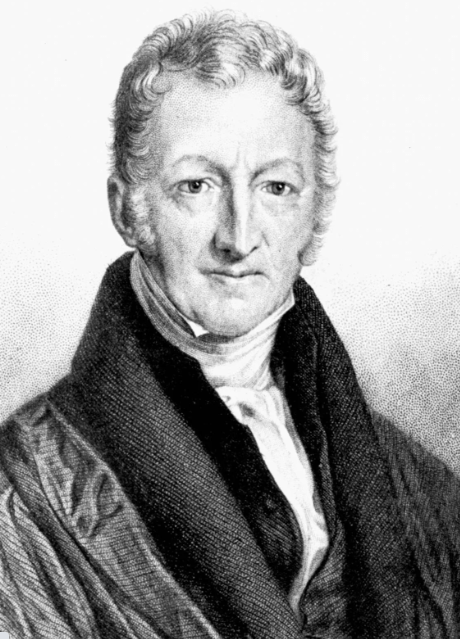
So how did the myth begin? One factor that has contributed to the perpetuation of the overpopulation myth is the influence of the upper class. Many of the early proponents of population control, such as Thomas Malthus (left), were members of the upper class who believed in the superiority of their own ways of life. They justified this through certain racist, post-colonialist, and eugenic ideologies, which said that certain racial and ethnic groups are inferior and need to be controlled. See the connection? Population control? We’ll get to that later. In 1798, Malthus wrote an essay called “An Essay on the Principle of Population”. In this essay, he predicted population growth would always continue to outpace the resources available to us, and that population must be curbed, or controlled, to make sure our population isn’t outpacing our resources. Many people read and believed Malthus’ book, and Malthusian theory, along with the myth of overpopulation, began spreading… straight from his racist principles. countries fell victim to the myth, including Haiti, which had just become an independent country about 10 years before Thomas Malthus published his essay. The country had won some bloody battles with France for independence and even had to pay for their war afterward. According to the New York Times, “Haiti’s ‘double debt’ – the ransom and the loan to pay it – helped cement its path into poverty and underdevelopment.” Haiti faced undeserved consequences like political and economic isolation, little help from other countries, and limited access to trade. The reason for this is that people like Malthus, who said that Haiti was overpopulated, really just didn’t want more poor (from the wars with France), colored people to make more babies. People would continue to believe in the myth for centuries into the future and still do today, due to all the promotion through various media sources and other things.

What about the effects of the myth? Well, for starters, before the bigger things, people believe a lot of false information about countries like Haiti and others that are “overpopulated”. For example, the Food and Agriculture Association of the United Nations says that Haiti’s forest coverage is 3.7%. This is so far off it’s astounding, especially from an official association like this. It’s incredible! The actual forest coverage in Haiti, from satellite views, is around 30%, which is similar to the United States and France, and even more than England and Ireland. The reason for this difference is that environmentalists and experts have made a connection between overpopulation, deforestation, and poverty for decades, and vice versa. So because people think that Haiti is “overpopulated” they also believe that there isn’t enough forest coverage there. The same thing happens in reverse, where some people see that there isn’t a lot of forest coverage, they also start to think that Haiti is overpopulated. Again, when Haiti had to pay for its war with France, and was sent into “poverty and underdevelopment,” people believed, and lots of them still do, that Haiti is overpopulated and deforested. This idea just goes and supports the myth more and more. Whether you think Haiti is “overpopulated,” or whether you think it has a lack of forest coverage, both ideas are linked to the same myth.
However, there’s another huge problem that comes with the myth of overpopulation. This is forced sterilization. Over 70,000 Americans were sterilized in the 20th century, most of them not giving consent, or without the knowledge that they are being sterilized. This is all because of a pseudoscience called eugenics. There are different “branches” of eugenics. The dictionary definition from Oxford Languages is “The study of how to arrange reproduction within a human population to increase the occurrence of heritable characteristics regarded as desirable.” Some eugenicists considered “desirable characteristics” skin color, especially back then. Those eugenicists said that there are superior and inferior genes. Today, even though not a lot of people know the origins of the overpopulation myth, people with these “inferior genes” are getting sterilized by the masses. Countries and governments that are enforcing these sterilization policies are actively limiting the population of lower caste and marginalized communities, like how Haiti was the victim of a lot of lies back in the late 1700s. In the mid-1900s, the US had a sterilization policy that has been recently proven to have targeted colored and disabled women. India also has had sterilization policies over the years. Even recently, in 2013, the BBC says that “India carried out nearly 4 million sterilisations during 2013-2014, according to official figures”. The surgeries carried out in India, that sterilized people, were often shoddy and led to complications and death for hundreds of people. In brief, since the mid-20th century, there have been many forced sterilization policies conducted throughout the world that strip marginalized communities of their natural right to reproduce, often without their consent.
Today, the myth of overpopulation is promoted very much through the media. On Youtube and TikTok, people post thousands of videos scoring millions of views and watch hours about overpopulation. However, they’re less informative, and more just assuming that overpopulation is this huge problem that needs to be combatted. One example of this is a youtube short that has achieved over 10 million views.
It’s a video about a fictional future where because of overpopulation, people have to play a deadly game of “Mother May I” for population control. These kinds of videos are really quite unfortunate because they promote the myth in a way that immediately makes watchers believe it. As people continue to watch these videos, and really just any other videos spreading misinformation similar to this, our world is growing to be more and more ignorant of what is really happening. Today, there are so, so many people that believe in overpopulation, and that we don’t have enough resources to account for all of us on Earth, but that just simply isn’t true. Videos like these cause a lot of problems and we can’t actually help people struggling with hunger and poverty if we believe that we need to sterilize or even kill them (as expressed in the video) for humanity to prevail. This sounds extreme, and it is, but that’s because of where it started. The point should remain though, killing people, or not allowing them to have children as a way of population control, is utterly cruel, dehumanizing, and sickening. We need to help our world by helping our people, not getting rid of them.
So, people think there aren’t enough resources in the world to account for the amount of people. There are though, and the reason that so many people are struggling is because of bad resource distribution, not a total lack of resources. People attempt to combat this through an ignorantly and maliciously executed approach: forced sterilization. But what is a more effective solution? Better resource distribution offers a great solution to help out all the struggling countries in the world. As said before, the political and economic isolation of Haiti is what hurts it, not the “overpopulation” that exists there. There’s a huge imbalance between countries in the world right now, and the resources that are available to them. Just compare a more wealthy country like the United States to a much poorer one, such as South Sudan (rated one of the poorest countries of 2023). The US has way more people and is twice as dense. South Sudan is so much poorer though, and neither country is overpopulated, not really. The issue is that South Sudan doesn’t have enough resources, especially compared to the United States. It’s not even half as wealthy as the US, even though its population density is half as dense. In brief, wealth and resource distribution are what make countries fall into poverty and become “overpopulated.” The problem is not too many people, it’s too few resources. It’s not overpopulation, it’s wealth distribution.
 Students of the Sidewalk